Sign Dictionary
297 signs · 180 distinct words · 91% of all signs written in the Indus texts. Each entry shows the sign, its IS number (after the ICIT sign list), the proposed word in Sanskrit and Devanagari, the Pāli form, the English meaning, and the number of distinct texts in which it appears. Signs that share one word are grouped in one entry.
People and offices
The human figure, and the same figure carrying a jar, a spear or a staff — the offices of the cities.
| Sign | IS · name | Sanskrit | Pāli | English | Texts |
|---|---|---|---|---|---|
 |
IS1090 | manuṣya मनुष्य |
manussa | human being, person | 149 |
 |
IS1175 | gṛhastha गृहस्थ |
gahaṭṭha | a seated human | 24 |
  |
IS1176 +1 | sādhaka साधक |
sādhaka | seeker, adept (2 forms) | 132 |
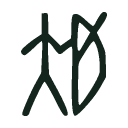 |
IS1125 | dhanurdhara धनुर्धर |
dhanuggaha | archer, bowman | 56 |
  |
IS1140 +1 | dvārapāla द्वारपाल |
dvārapāla | door guardian, gatekeeper (2 forms) | 104 |
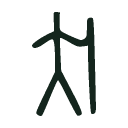 |
IS1142 | rakṣaka रक्षक |
rakkhaka | guard, protector; a human figure with a staff | 64 |
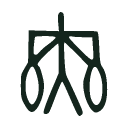 |
IS1151 | pāla पाल |
pāla | bearer, keeper (office title; provisional) | 79 |
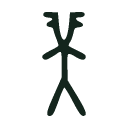 |
IS1152 | kumbha-gaṇa कुम्भ-गण |
kumbha-gaṇa | human with jar (office title; provisional); a person with a jar | 1 |
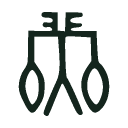 |
IS1154 | kumbha-pāla कुम्भ-पाल |
kumbha-pāla | bearer of jar (office title; provisional); a bearer figure with a jar and no hands shown | 39 |
 |
IS1156 | kumbha-kāra-pāla कुम्भ-कार-पाल |
kumbhakāra-pāla | overseer of potters (office title; provisional); a bearer figure with a jar | 47 |
  |
IS1159 +1 | śakti-pāla शक्ति-पाल |
satti-pāla | spear bearer (office title (2 forms) | 18 |
 |
IS1692 | ṛṣi / purohita ऋषि / पुरोहित |
isi / purohita | seer, priest; the presiding office | 68 |
  |
IS1384 +1 | loka लोक |
loka | royal name, unread (2 forms) | 78 |
 |
IS1097 | patheṣṭhā पथेष्ठा |
pathika | standing on the road | 13 |
 |
IS1091 | dvi-manuṣya द्वि-मनुष्य |
dvi-manussa | two humans | 18 |
 |
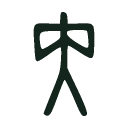
IS1095 | vandaka वन्दक |
vandaka | worshipper; a human raising one hand | 22 |
 |
IS1150 | gopāla गोपाल |
gopāla | herdsman, cowherd | 6 |
 |
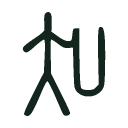
IS1130 | kṛṣaka कृषक |
kassaka | ploughman, farmer | 14 |
  |
IS1111 +1 | kumbha-dhara कुम्भ-धर |
kumbha-dhara | pot-holder (2 forms) | 17 |
 |
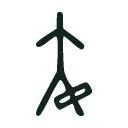
IS1160 | śakti-dhara शक्ति-धर |
satti-dhara | spear-holder, and also a title of Skanda | 5 |
 |
IS1137 | baddha-manuṣya बद्ध-मनुष्य |
baddha-manussa | bound man, captive | 9 |
 |
IS1104 | jana जन |
jana | people, folk, a group of men | 20 |
Deities and the sacred
The horned god and his epithets, the trident, lamps, the fire drill, altars and the sacrificial post, the cymbals, the canopy, the sanctum and the act of homage.
| Sign | IS · name | Sanskrit | Pāli | English | Texts |
|---|---|---|---|---|---|
 |
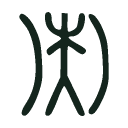
IS1100 | paśupati पशुपति |
pasupati | Paśupati, lord of animals; a horned human figure | 111 |
  |
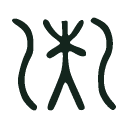
IS1101 +1 | antar-candra-paśupati अन्तर्-चन्द्र-पशुपति |
antarā-canda-pasupati | Paśupati between the moons (2 forms) | 9 |
 |
IS1103 | antar-nadī-paśupati अन्तर्-नदी-पशुपति |
antarā-nadī-pasupati | sacred river; horned figure with flowing lines | 5 |
   |
IS1390 +2 | triśūla त्रिशूल |
tisūla | trident (3 forms) | 306 |
 |
IS1391 | divya-triśūla दिव्य-त्रिशूल |
dibba-tisūla | trident under a roof; celestial trident | 9 |
 |
IS1455 | triloka त्रिलोक |
tiloka | the three worlds; a sign in three sections | 42 |
 |
IS1413 | dīpastambha दीपस्तम्भ |
dīpathambha | lamp pillar, standing lamp | 33 |
 |
IS1415 | pañca-dīpa पञ्च-दीप |
pañca-dīpa | five-wick lamp | 129 |
 |
IS1416 | daśa-dīpa दश-दीप |
dasa-dīpa | ten-wick lamp | 40 |
 |
IS1575 | vedi वेदि |
vedi | altar, shrine | 70 |
 |
IS1585 | yajña यज्ञ |
yañña | sacrifice, fire altar | 44 |
 |
IS1590 | vedikā वेदिका |
vedikā | small altar or railing | 174 |
 |
IS1591 | antar-vedikā अन्तर्-वेदिका |
antarā-vedikā | small altar between lines | 1 |
 |
IS1592 | baddha-vedikā बद्ध-वेदिका |
baddha-vedikā | small altar or railing confined | 7 |
 |
IS1593 | karka-vedikā कर्क-वेदिका |
kakkaṭa-vedikā | small altar or railing marked with the karka figure | 1 |
  |
IS1597 +1 | yūpa यूप |
yūpa | sacrificial post (2 forms) | 50 |
 |
IS1705 | tilaka तिलक |
tilaka | forehead mark of a deity (tilaka); a pot with a centre line | 167 |
 |
IS1717 | jālaka जालक |
jālaka | screen, lattice partition; separates the sanctum from the outside | 50 |
 |
IS1790 | garbha गर्भ |
gabbha | womb, egg, inner seed; an oval outline | 43 |
   |
IS1832 +2 | eka-garbha एक-गर्भ |
eka-gabbha | womb, egg, inner seed (3 forms) | 49 |
   |
IS1830 +2 | dvi-garbha द्वि-गर्भ |
dvi-gabbha | womb, egg, inner seed (3 forms) | 9 |
 |
IS1831 | tri-garbha त्रि-गर्भ |
ti-gabbha | womb, egg, inner seed; an oval outline with 3 inside | 17 |
 |
IS1833 | catur-garbha चतुर्-गर्भ |
catu-gabbha | womb, egg, inner seed; an oval outline with 4 inside slanted | 2 |
 |
IS1808 | garbhāśaya गर्भाशय |
gabbhāsaya | womb holding an embryo; an oval within an oval | 8 |
 |
IS1837 | vibhakta-garbha विभक्त-गर्भ |
vibhatta-gabbha | divided womb | 1 |
  |
IS1803 +1 | jīva जीव |
jīva | life, living being (2 forms) | 217 |
  |
IS1804 +1 | baddha-jīva बद्ध-जीव |
baddha-jīva | bound or enclosed life (2 forms) | 11 |
 |
IS1805 | vṛkṣa-jīva वृक्ष-जीव |
rukkha-jīva | tree life, plant life; a tree inside an oval | 3 |
 |
IS1165 | śaṅkha शङ्ख |
saṅkha | conch; the conch shell, sounded in ritual | 27 |
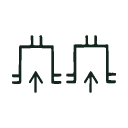 |
IS1586 | dvi-yajña द्वि-यज्ञ |
dvi-yañña | two fires / two sacrifices | 2 |
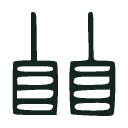 |
IS1596 | dvi-yūpa द्वि-यूप |
dvi-yūpa | two sacrificial posts; items stacked around two poles | 2 |
 |
IS1923 | namas / namati नमस् / नमति |
namo / namati | bow, homage; bows (to) | 35 |
 |
IS1930 | chattra छत्त्र |
chatta | canopy | 7 |
 |
IS1070 | araṇi अरणि |
araṇī | fire drill | 37 |
 |
IS1772 | dīpa-mālā दीप-माला |
dīpa-mālā | row of lamps | 10 |
 |
IS1167 | tāla ताल |
tāḷa | hand-cymbals, rhythm | 9 |
Animals, plants and land
Fish, turtle, crab and bird — sacred and celestial as well as natural — leaves, trees, mountains and the river.
| Sign | IS · name | Sanskrit | Pāli | English | Texts |
|---|---|---|---|---|---|
   |
IS1220 +2 | mīnā मीना |
mīnā | fish (3 forms) | 538 |
 |
IS1231 | eka-mīnā एक-मीना |
eka-mīnā | fish with a stroke | 83 |
 |
IS1219 | dvi-mīnā द्वि-मीना |
dvi-mīnā | a pair of fish | 6 |
   |
IS1221 +2 | antar-mīnā अन्तर्-मीना |
antarā-mīnā | fish between brackets (3 forms) | 21 |
  |
IS1226 +1 | baddha-mīnā बद्ध-मीना |
baddha-mīnā | bound or enclosed fish (2 forms) | 45 |
 |
IS1232 | eka-baddha-mīnā एक-बद्ध-मीना |
eka-baddha-mīnā | bound or enclosed fish with a stroke | 10 |
  |
IS1240 +1 | kūrma कूर्म |
kumma | turtle, tortoise (2 forms) | 270 |
 |
IS1794 | saṃyata-kūrma संयत-कूर्म |
saññata-kumma | turtle, tortoise withdrawn/restrained | 13 |
 |
IS1241 | baddha-kūrma बद्ध-कूर्म |
baddha-kumma | bound or enclosed turtle | 12 |
  |
IS1798 +1 | karka / karkaṭa कर्क / कर्कट |
kakkaṭa | crab (2 forms) | 131 |
     |
IS1550 +4 | karka कर्क |
kakkaṭa | crab, geometric form (5 forms) | 151 |
 |
IS1552 | dvi-karka द्वि-कर्क |
dvi-kakkaṭa | two crabs, geometric forms facing | 10 |
     |
IS1260 +4 | pakṣin पक्षिन् |
pakkhin | bird (5 forms) | 23 |
 |
IS1262 | haṃsa हंस |
haṃsa | swan | 2 |
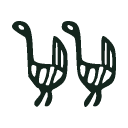 |
IS1261 | dvi-pakṣin द्वि-पक्षिन् |
dvi-pakkhin | two birds | 1 |
   |
IS1267 +2 | antar-pakṣin अन्तर्-पक्षिन् |
antarā-pakkhin | bird between brackets (3 forms) | 19 |
 |
IS1171 | dvi-parṇa द्वि-पर्ण |
dvi-paṇṇa | two leaves | 21 |
 |
IS1382 | parṇa पर्ण |
paṇṇa | leaf | 18 |
  |
IS1405 +1 | vṛkṣa वृक्ष |
rukkha | tree (2 forms) | 85 |
 |
IS1927 | nadī नदी |
nadī | river | 10 |
  |
IS1776 +1 | vaṭa वट |
vaṭa | fig tree, banyan (2 forms) | 9 |
 |
IS1463 | parvata पर्वत |
pabbata | mountain range | 24 |
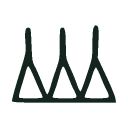 |
IS1460 | śikhara शिखर |
sikhara | mountain peaks | 37 |
Calendar and sky
The moon and its days, full and new moon, rising and setting, twelve month signs, the fortnight, four seasons, directions, the third heaven, the celestial fish and the junctions of heaven and earth.
| Sign | IS · name | Sanskrit | Pāli | English | Texts |
|---|---|---|---|---|---|
     |
IS1899 +4 | candra / candramas चन्द्र / चन्द्रमस् |
canda | moon (5 forms) | 92 |
 |
IS1910 | baddha-candra बद्ध-चन्द्र |
baddha-canda | bound (enclosed) moon with one mark | 2 |
  |
IS1904 +1 | dvitīyā द्वितीया |
dutiyā | second moon (2 forms) | 61 |
 |
IS1914 | caturthī चतुर्थी |
catutthī | fourth day of the lunar fortnight | 1 |
 |
IS1908 | pañcamī पञ्चमी |
pañcamī | fifth day of the lunar fortnight | 3 |
 |
IS1906 | śukla-kṛṣṇa शुक्ल-कृष्ण |
sukka-kaṇha | moon phases facing away | 16 |
  |
IS1920 +1 | pūrṇimā पूर्णिमा |
puṇṇamī | full moon (2 forms) | 149 |
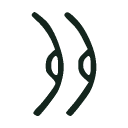 |
IS1919 | dvi-pūrṇimā द्वि-पूर्णिमा |
dvi-puṇṇamī | two full moons | 2 |
 |
IS1918 | tri-pūrṇimā त्रि-पूर्णिमा |
ti-puṇṇamī | three full moons | 1 |
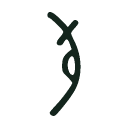 |
IS1922 | amāvāsyā अमावास्या |
amāvasī | new moon, the dark moon | 4 |
 |
IS1913 | udaya-asta उदय-अस्त |
udaya-attha | rising or setting sun or moon | 1 |
 |
IS1909 | tri-udaya-asta त्रि-उदय-अस्त |
ti-udaya-attha | rising or setting sun or moon | 3 |
 |
IS1057 | antar-candra-dvādaśa अन्तर्-चन्द्र-द्वादश |
antarā-canda-dvādasa | twelve between moon phases | 1 |
            |
IS1319 +11 | māsa मास |
māsa | month (12 forms) | 48 |
        |
IS1530 +7 | pakṣa पक्ष |
pakkha | fortnight (8 forms) | 52 |
 |
IS1338 | vasanta वसन्त |
vasanta | spring; season sign, sprouts over legs | 1 |
 |
IS1336 | grīṣma ग्रीष्म |
gimha | summer; season sign, open horns over a comb base | 10 |
 |
IS1337 | śarad शरद् |
sarada | autumn, harvest time; season sign, horns over a solid bar (the full ear) | 13 |
 |
IS1335 | hemanta हेमन्त |
hemanta | winter; season sign, a closed box under two marks (stored grain) | 28 |
 |
IS1683 | pradiś प्रदिश् |
padisā | the four intermediate directions; a cross with four leaf-shaped ends | 3 |
 |
IS1044 | tridiva त्रिदिव |
tidiva | the third heaven; three strokes under the sky-roof | 1 |
  |
IS1235 +1 | divya-mīnā दिव्य-मीना |
dibba-mīnā | celestial fish (fish under a roof) (2 forms) | 207 |
 |
IS1236 | baddha-mīnā-rāśi बद्ध-मीना-राशि |
baddha-mīnā-rāsi | bound or enclosed celestial fish | 20 |
 |
IS1678 | divya-sandhi दिव्य-सन्धि |
dibba-sandhi | junction of the celestial | 2 |
 |
IS1679 | bhūmi-sandhi भूमि-सन्धि |
bhūmi-sandhi | junction of the earth | 17 |
Weights and measures
The weight and its many diamond forms, the stacked weights, the balance beam, the balance and the act of weighing; the plumb bob, the measure, the compasses, the knot, the rope and the chain.
| Sign | IS · name | Sanskrit | Pāli | English | Texts |
|---|---|---|---|---|---|
                             |
IS1861 +28 | tulā / tulayati तुला / तुलयति |
tulā | weight, balance (29 forms) | 524 |
   |
IS1854 +2 | baddha-tulā बद्ध-तुला |
baddha-tulā | weight of unknown value confined (3 forms) | 6 |
 |
IS1503 | bhāra भार |
bhāra | weights | 45 |
 |
IS1645 | sandhi सन्धि |
sandhi | junction, joint, the point where two things meet | 19 |
 |
IS1625 | caturasra चतुरस्र |
caturassa | square, four-cornered figure | 11 |
 |
IS1368 | tulā-daṇḍa तुला-दण्ड |
tulādaṇḍa | balance beam or hanger | 106 |
 |
IS1690 | tulayati तुलयति |
tuleti | balance | 76 |
 |
IS1504 | tulādhāra तुलाधार |
tulādhāra | weighing scales, balance; one who holds the balance | 9 |
 |
IS1752 | avalamba अवलम्ब |
olamba | plumb bob | 21 |
 |
IS1350 | lambaka लम्बक |
lambaka | plumb bob; centring something vertically, such as a spire over its base | 48 |
 |
IS1482 | māna मान |
māna | measure | 26 |
 |
IS1534 | karkaṭaka कर्कटक |
kakkaṭaka | compasses, dividers | 3 |
 |
IS1255 | granthi ग्रन्थि |
gantha | knot | 103 |
 |
IS1435 | ut-kal उत्-कल् |
ukal | rope | 56 |
 |
IS1215 | bandhana बन्धन |
bandhana | chain | 9 |
Farming, fields and settlement
The plough, the furrow and the seed drill, fields counted and divided, the house with its window and ladder, the village, the city and its banner.
| Sign | IS · name | Sanskrit | Pāli | English | Texts |
|---|---|---|---|---|---|
   |
IS1061 +2 | sīra सीर |
sīra | plough (3 forms) | 77 |
  |
IS1400 +1 | sītā सीता |
sītā | furrow (2 forms) | 303 |
 |
IS1401 | dvi-sītā द्वि-सीता |
dvi-sītā | double furrow | 7 |
 |
IS1299 | bahuśaṅku बहुशङ्कु |
bahusaṅku | seed-planting tool with multiple pointed prongs | 2 |
      |
IS1630 +5 | kṣetra क्षेत्र |
khetta | field (6 forms) | 67 |
  |
IS1636 +1 | dvi-kṣetra द्वि-क्षेत्र |
dvi-khetta | two fields (2 forms) | 17 |
 |
IS1638 | tri-kṣetra त्रि-क्षेत्र |
ti-khetta | three fields; a marked box with three inner sections | 1 |
 |
IS1639 | ardha-kṣetra अर्ध-क्षेत्र |
khetta | half a field; a marked box with a half circle | 1 |
 |
IS1626 | catur-bhāga-kṣetra चतुर्-भाग-क्षेत्र |
catu-bhāga-khetta | field of four parts | 8 |
 |
IS1480 | gṛha / geha गृह / गेह |
geha / ghara | house, dwelling | 36 |
 |
IS1621 | gavākṣa गवाक्ष |
gavakkha | window | 22 |
 |
IS1317 | sopāna सोपान |
sopāna | ladder | 12 |
 |
IS1615 | grāma ग्राम |
gāma | village, town; a grid | 40 |
 |
IS1617 | nagara नगर |
nagara | township, city; a double grid | 59 |
 |
IS1495 | ketu केतु |
ketu | banner marking a place | 26 |
Vessels and household
The jar — the commonest sign in the script — and the pots of the kitchen, the mortar, the wheel, the bangles and the loom.
| Sign | IS · name | Sanskrit | Pāli | English | Texts |
|---|---|---|---|---|---|
 |
IS1740 | pati, -pati पति, -पति |
pati, -pati | lord; after a name, the title -pati | 1332 |
 |
IS1741 | eka-kumbha एक-कुम्भ |
eka-kumbha | jar with 1 mark; the jar sign with one stroke | 200 |
 |
IS1742 | dvi-kumbha द्वि-कुम्भ |
dvi-kumbha | jar with 2 marks; the jar sign with two strokes | 49 |
 |
IS1745 | tri-kumbha त्रि-कुम्भ |
ti-kumbha | jar with 3 marks; the jar sign with three strokes | 31 |
 |
IS1748 | catur-kumbha चतुर्-कुम्भ |
catu-kumbha | jar with 4 marks; the jar sign with four strokes | 2 |
 |
IS1700 | pātra पात्र |
patta | pot, vessel; plain and general purpose, and counted | 109 |
 |
IS1702 | dvi-pātra द्वि-पात्र |
dvi-patta | pot with two marks | 10 |
 |
IS1703 | tri-pātra त्रि-पात्र |
ti-patta | pot with three marks | 11 |
 |
IS1701 | divya-dvi-pātra दिव्य-द्वि-पात्र |
dibba-dvi-patta | pot with two marks under roof | 1 |
  |
IS1760 +1 | udaka-kumbha उदक-कुम्भ |
udaka-kumbha | water pot (2 forms) | 112 |
 |
IS1706 | ulūkhala उलूखल |
udukkhala | mortar; a pot or bowl used with a pestle | 81 |
 |
IS1732 | ukhā उखा |
ukkhali | pot on firewood | 2 |
 |
IS1820 | cakra चक्र |
cakka | wheel, cycle | 212 |
 |
IS1821 | dvi-cakra द्वि-चक्र |
dvi-cakka | double wheels | 11 |
 |
IS1840 | valaya वलय |
valaya | bangles, bracelets | 96 |
 |
IS1527 | tantra तन्त्र |
tanta | loom; threads stretched between two beams | 59 |
Weapons and the goad
Arrow, arrowhead, bow, spear, fork and the thunderbolt, and the goad that controls animals. The spear is also śakti, power.
| Sign | IS · name | Sanskrit | Pāli | English | Texts |
|---|---|---|---|---|---|
 |
IS1520 | śakti शक्ति |
satti | spear; also power (śakti), and the suffix -śakti in compounds | 229 |
 |
IS1515 | śara शर |
sara | arrow | 13 |
 |
IS1519 | dvi-śara द्वि-शर |
dvi-sara | double arrows | 15 |
 |
IS1500 | śalya शल्य |
salla | arrowhead | 14 |
  |
IS1501 +1 | tri-śalya त्रि-शल्य |
ti-salla | arrowhead with three marks (2 forms) | 7 |
   |
IS1892 +2 | dhanus धनुस् |
dhanu | bow and arrow (3 forms) | 70 |
 |
IS1893 | dvi-dhanus द्वि-धनुस् |
dvi-dhanu | double bow and arrow | 4 |
 |
IS1895 | baddha-dhanus बद्ध-धनुस् |
baddha-dhanu | bow and arrow confined | 1 |
 |
IS1824 | vajra वज्र |
vajira | thunderbolt; an oval with four points, four-cornered | 20 |
 |
IS1392 | dvi-śūla द्वि-शूल |
dvi-sūla | fork | 6 |
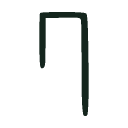 |
IS1440 | aṅkuśa अङ्कुश |
aṅkusa | hook, goad, control, restrain | 44 |
Numbers
Strokes count. Short strokes and long strokes are two sets of the same numbers; grouped strokes (4+3 for seven) are read as one number; numbers between brackets are set apart.
| Sign | IS · name | Sanskrit | Pāli | English | Texts |
|---|---|---|---|---|---|
  |
IS1001 +1 | eka एक |
eka | number 1 (2 forms) | 410 |
   |
IS1002 +2 | dvi द्वि |
dvi | number 2 (3 forms) | 1081 |
  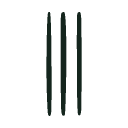 |
IS1003 +2 | tri त्रि |
ti | number 3 (3 forms) | 442 |
  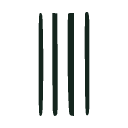 |
IS1004 +2 | catur चतुर् |
catu | number 4 (3 forms) | 124 |
  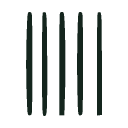 |
IS1005 +2 | pañca पञ्च |
pañca | number 5 (3 forms) | 74 |
   |
IS1006 +2 | ṣaṭ षट् |
cha | number 6 (3 forms) | 53 |
   |
IS1007 +2 | sapta सप्त |
satta | number 7 (3 forms) | 74 |
 |
IS1018 | aṣṭa अष्ट |
aṭṭha | number 8; short strokes in groups (4+4) | 7 |
 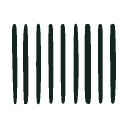 |
IS1019 +1 | nava नव |
nava | number 9 (2 forms) | 7 |
 |
IS1020 | daśa दश |
dasa | number 10; short strokes in groups (5+5) | 2 |
 |
IS1055 | dvādaśa द्वादश |
dvādasa | number 12; short strokes in groups (4+4+4) | 51 |
 |
IS1042 | baddha-eka बद्ध-एक |
baddha-eka | number 1 confined; one long stroke | 2 |
 |
IS1056 | caturviṃśati चतुर्विंशति |
catuvīsati | 24 short lines | 3 |
 |
IS1047 | antar-tri अन्तर्-त्रि |
antarā-ti | three lines between brackets | 1 |
  |
IS1050 +1 | antar-ṣaṭ अन्तर्-षट् |
antarā-cha | six lines between brackets (2 forms) | 7 |
 |
IS1049 | antar-sapta अन्तर्-सप्त |
antarā-satta | seven within brackets | 5 |
Grammar signs
A sign that carries no object of its own but joins the words around it.
| Sign | IS · name | Sanskrit | Pāli | English | Texts |
|---|---|---|---|---|---|
 |
IS1060 | -sya -स्य |
-ssa | genitive marker 'of'; links the word before it to the words after it. Shaped like an elephant's trunk, hence the alternative reading gaja (elephant) | 209 |
Composite words
Signs that regularly stand together and make sense together form one word (Grammar, Rule 3). Each composite is shown with its signs in reading order; a family of variant forms (the fish forms, the jar forms) is shown by its first member.
| Signs | Sanskrit | Pāli | English | Texts |
|---|---|---|---|---|
| |
sapta-yajña-pati सप्त-यज्ञ-पति |
satta-yañña-pati | lord of the seven sacrifices | 14 |
| |
mīnā-śakti मीना-शक्ति |
mīnā-satti | the goddess Mīnā-śakti, fish-power | 83 |
| |
tri-śakti त्रि-शक्ति |
ti-satti | threefold power; three spears | 51 |
| |
trilokapati त्रिलोकपति |
tilokapati | lord of the three worlds | 7 |
| |
sītā-pati सीता-पति |
sītā-pati | lord of the furrow | 32 |
| |
mīnā-pati मीना-पति |
mīnā-pati | lord of Mīnā — an epithet of the god | 54 |
| |
tulayati तुलयति |
tuleti | weighs; the one who weighs | 244 |
| |
triśūla-pati त्रिशूल-पति |
tisūla-pati | lord of the trident — an epithet of the god | 39 |
| |
vaṭapati वटपति |
vaṭapati | lord of the banyan | 2 |
| |
śaktivān शक्तिवान् |
sattimant | the powerful one; the spear-holder | 1 |
| |
Śiva-jīva शिव-जीव |
siva-jīva | Śiva's living being (under review) | 16 |
| |
Śiva-mīnā शिव-मीना |
siva-mīnā | Śiva-Mīnā (under review) | 28 |
† Read on the photograph of M-147, where the catalogue string runs the other way; not yet counted in the corpus.