Culture
What the texts record about life in the Indus cities, topic by topic, each claim with the test behind it.
Many signs name the objects of worship and sacrifice: the altar, the post, the lamp, the mortar, the strainer, the jars, the trident and the deity. When such signs stand together in a fixed order, the order can be set beside rites known from later Indian tradition. This section records what the texts show and the test behind each claim. It records a continuity of practice. It does not claim that the Indus language was Sanskrit: the Sanskrit words are labels for the meanings.
The soma rite
The sign IS1388, a stalk with hatched branches and a hatched crown, is read soma. It stands in a formula found at Mohenjo-daro, Harappa and Dholavira:
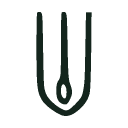
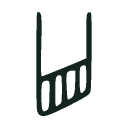

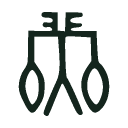
ulūkhala · jālaka · soma · kumbha-pāla — mortar · strainer · soma · keeper of the jars (M-1270, Mohenjo-daro)
That is the soma rite of the Ṛgveda, step by step: the plant is pressed in the mortar (ulūkhala, Ṛgveda 1.28), purified through the strainer (the whole of Book 9, soma pavamāna), and gathered in jars (kalaśa). The strainer–soma–jars run occurs in 4 texts: H-643 (Harappa); M-1270 (Mohenjo-daro); M-1338 (Mohenjo-daro); an unnumbered object (Dholavira).
The moon. In Ṛgveda 10.85 soma is the moon, which wanes as the deities drink it and swells again. IS1388 stands immediately before śukla-kṛṣṇa, the waxing and waning, in 3 texts (M-133, M-451, M-1427).
The plant and the grain. The same hatched branches mark IS1384 yava, barley. Barley and soma are the grain and the plant of the sacrifice, and the Ṛgveda mixes them (yavāśir, soma blended with barley).

A title of the seven sacrifices. M-580 (Mohenjo-daro) reads
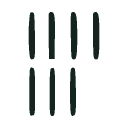
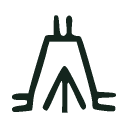
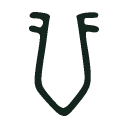
sapta · yajña · soma · pati — seven · sacrifice · soma · lord: the lord of the soma of the seven sacrifices
How strong the soma formula is
Each run was compared with 5,000 shuffles of the whole corpus in which every sign keeps its usual kind of position — first, middle or last — so that "these signs simply sit early or late" cannot explain the result.
| Sequence | Texts | Expected by chance | Sites |
|---|---|---|---|
| jālaka · soma · kumbha-pāla | 4 | 0.00 | Mohenjo-daro 2, Dholavira 1, Harappa 1 |
| jālaka · soma | 5 | 0.16 | Harappa 2, Mohenjo-daro 2, Dholavira 1 |
| soma · kumbha-pāla | 4 | 0.18 | Mohenjo-daro 2, Dholavira 1, Harappa 1 |
| ulūkhala · jālaka | 1 | 0.20 | Mohenjo-daro 1 |
Wherever two of the four signs — mortar, strainer, soma, keeper of the jars — share a text, they stand in the order of the rite 17 times and reversed 1 time.
What is not established: the mortar step rests on one text (1 against 0.20 expected). The formula proven by the test is strainer · soma · jars; the mortar is a strong hint, not yet a finding.
Sacrifice: the altar, the post and the sacred seven
Pairs that recur far more often than chance and belong to the Vedic sacrifice:
| Pair | Texts | Expected by chance | Sites |
|---|---|---|---|
| vedi · yūpa | 4 | 0.23 | Harappa 2, Mohenjo-daro 2 |
| sapta · yajña | 19 | 0.26 | Mohenjo-daro 12, Harappa 4, Kalibangan 2, Rupar 1 |
| sapta · vedi | 14 | 0.26 | Mohenjo-daro 8, Harappa 5, Khirsara 1 |
In the Śrauta rite the sacrificial post, yūpa, stands at the altar, vedi. Seven is the sacred number of the Ṛgvedic priests and offerings, and it attaches here to the sacrifice and to the altar.
Worship before the deity
A second group of recurring pairs belongs to a different practice:
| Pair | Texts | Expected by chance | Sites |
|---|---|---|---|
| vedikā · triśūla | 69 | 4.13 | Mohenjo-daro 31, Harappa 21, Dholavira 5, Lothal 5, Chanhu-daro 2, Allahdino 1, Hulas 1, Kish 1, Unknown 1, Gonur Depe 1 |
| pañca-dīpa · paśupati | 37 | 1.17 | Mohenjo-daro 26, Harappa 8, Unknown 1, Gola Dhoro (Bagasra) 1, Rakhigarhi 1 |
| sādhaka · paśupati | 13 | 1.32 | Harappa 6, Mohenjo-daro 6, Kalibangan 1 |
| tilaka · tāla | 4 | 0.11 | Harappa 2, Mohenjo-daro 2 |
| vandaka · yūpa | 3 | 0.07 | Mohenjo-daro 3 |
Lamps before the image, the forehead mark, cymbals and a shrine for the deity are the elements of pūjā, the worship of later Hindu temples, not of the Ṛgvedic fire sacrifice. The altar and the trident is the commonest ritual pair in the whole corpus.
What this shows, and what it does not
- Shown: these are fixed sequences in the Indus writing, each far more frequent than chance allows, and each holds at more than one site unless noted below.
- Both strands: the texts carry sacrifice (soma, altar and post, the sevens) and worship (lamp, mark, cymbals, shrine). The fair statement is continuity with later Indian ritual, sacrifice and worship alike.
- Continuity of practice, not of language. The Indus cities (c. 2600–1900 BCE) are older than the Ṛgveda (c. 1500–1000 BCE); a shared rite does not make a shared tongue.
- The meanings depend on the readings. The tests prove the order of the signs; what the order means rests on the values given to them.
- Soma and the fish. IS1388 often follows a fish sign, and the soma reading does not yet explain that.
- One city so far: dīpastambha · vedi — 7 of its 8 texts are from Harappa; it may be that city's practice.
- One city so far: vandaka · yūpa — 3 of its 3 texts are from Mohenjo-daro; it may be that city's practice.